

Svevia meets Trafikverket's BEAst requirements – without an in-house system
Trollhättan road maintenance contract · 100 km of roads · four-year contract
- Customer
- Svevia
- Contract
- Trollhättan road maintenance
- Scope
- Approx. 100 km of roads
- Term
- Four years + two-year option
- Resources
- Two machine teams, 8–9 months/year
- Solution
- Pinpointer for planning, field app and BEAst reporting
When Svevia took on the road maintenance contract around Trollhättan, one requirement from Trafikverket came with it: bulk material management must be reported digitally via BEAst. Without an in-house system to fall back on, Svevia chose to partner with Pinpointer – and has since run the entire mass flow through the platform.
100 km of roads, two machine teams – and drainage drives the volumes
Svevia is responsible for operating and maintaining roughly 100 km of roads in the Trollhättan contract. The contract runs for four years, with an option for two more. The work spans everything from snow clearing to keeping the roads intact and clean, but most of the bulk material work comes from drainage projects – diverting water to protect road durability and reduce damage.
Emma Sjögren is site supervisor at Svevia in Trollhättan and is responsible for planning and leading the work, keeping production running and making sure all requirements are met. With two machine teams running eight to nine months a year, depending on the weather, a lot of mass is in motion.
"The moment we put the bucket in the ground we have to know where we're digging and where the masses are going."
Full control of the masses – translated into colour codes in the field
For Svevia, the BEAst requirement means full control over the masses in practice: where they come from, where they are transported and in what volumes. The masses are sampled kilometre by kilometre by Svevia's specialists in contaminated ground and classified accordingly. To keep it simple in the field, the classification is translated into colour codes – white, yellow, orange, red – that the operators follow directly on site.
Without a system, the alternative would have been pen and paper in the machine or spreadsheets after the fact.
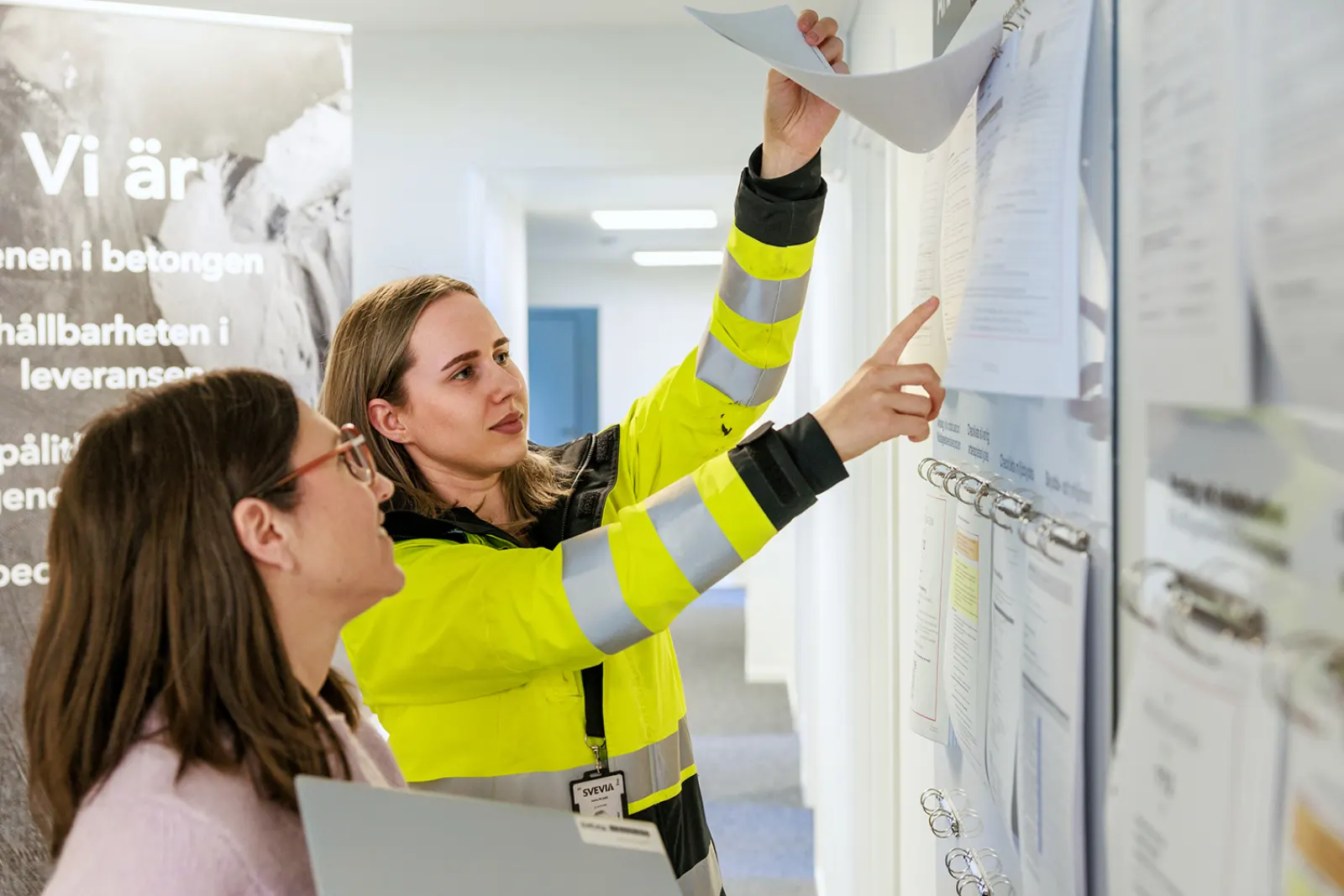
"It would have been much more time-consuming, both for the people in the field and for the admin team in the office."
From bucket in the ground to documented load
The flow is simple. In the Pinpointer app the operator picks the classification to dig up and sends the load to the right driver. The driver sees the job on their phone, accepts it, loads up and drives to the assigned location. Once there, the driver registers that the load has been unloaded – and it's documented and ready for reporting.
Operator picks the classification
In the Pinpointer app the operator selects which classification to dig up and sends the load to the right driver.
Driver accepts on mobile
The driver sees the job on their phone, accepts it and knows exactly which masses to load.
Transport to the assigned site
The driver heads to the location specified for that classification – no doubt about where the masses belong.
Unloading registered on the spot
Once there, the driver registers that the load has been unloaded – and it's documented and ready for reporting.
The worry about "yet another clunky system" never materialised
The biggest concern before the start was the operators and drivers – would they see it as yet another clunky system? That worry never materialised.
"We've been delighted from the start. Nothing has gone wrong, and it's been easy even for those who aren't particularly comfortable with computers."
Even sub-contracted drivers who have only run a handful of days have picked it up quickly.
Minimal back-office work and a far better real-time view
The biggest difference is in the back-office work. Where manual documentation used to demand heavy after-the-fact admin, today the back-office work is minimal – a quick check that everything looks right, and it's done.
"It's an enormous amount of time saved. And you get a much better real-time view of what's actually going in."
Beyond the time saving, the platform gives better follow-up: Svevia can see how much each machine team produces and how many loads they manage in a day – something that used to be much harder to track.
BEAst reporting without an in-house system
Svevia meets Trafikverket's digital reporting requirement without having to build or buy a system of its own.
Minimal back-office work
Where manual documentation used to demand heavy after-the-fact admin, now a quick check is enough.
Real-time view of production
Svevia can see how much each machine team produces and how many loads they manage per day.
Easy even for new users
Sub-contracted drivers running only a few days have quickly picked up the flow.
Give it a try
For other contractors facing BEAst requirements from Trafikverket but lacking the tools, Emma's advice is simple: give it a try.
"It saves time and gives much better control of where the masses actually end up. And it's not just a data system for us in the office – it's easy for everyone, even out in the field."
Asked whether she would recommend that others try Pinpointer, the answer is short: absolutely.
BEAst requirements landing on your desk?
We're happy to show how Pinpointer can take care of the entire mass flow and the reporting – without you having to build or buy a system of your own.