
Visibility every day — not a verdict when it's too late
Erik Samuelsson, Wallenstam · Åbybergsgatan, Mölndal · new residential build
- Customer
- Wallenstam
- Project
- New residential build, Åbybergsgatan, Mölndal
- Type
- Apartment building with large basement
- Role
- Developer and client
- Baseline
- Pre-classification + forecast per fraction
- Solution
- Pinpointer for daily follow-up and reporting
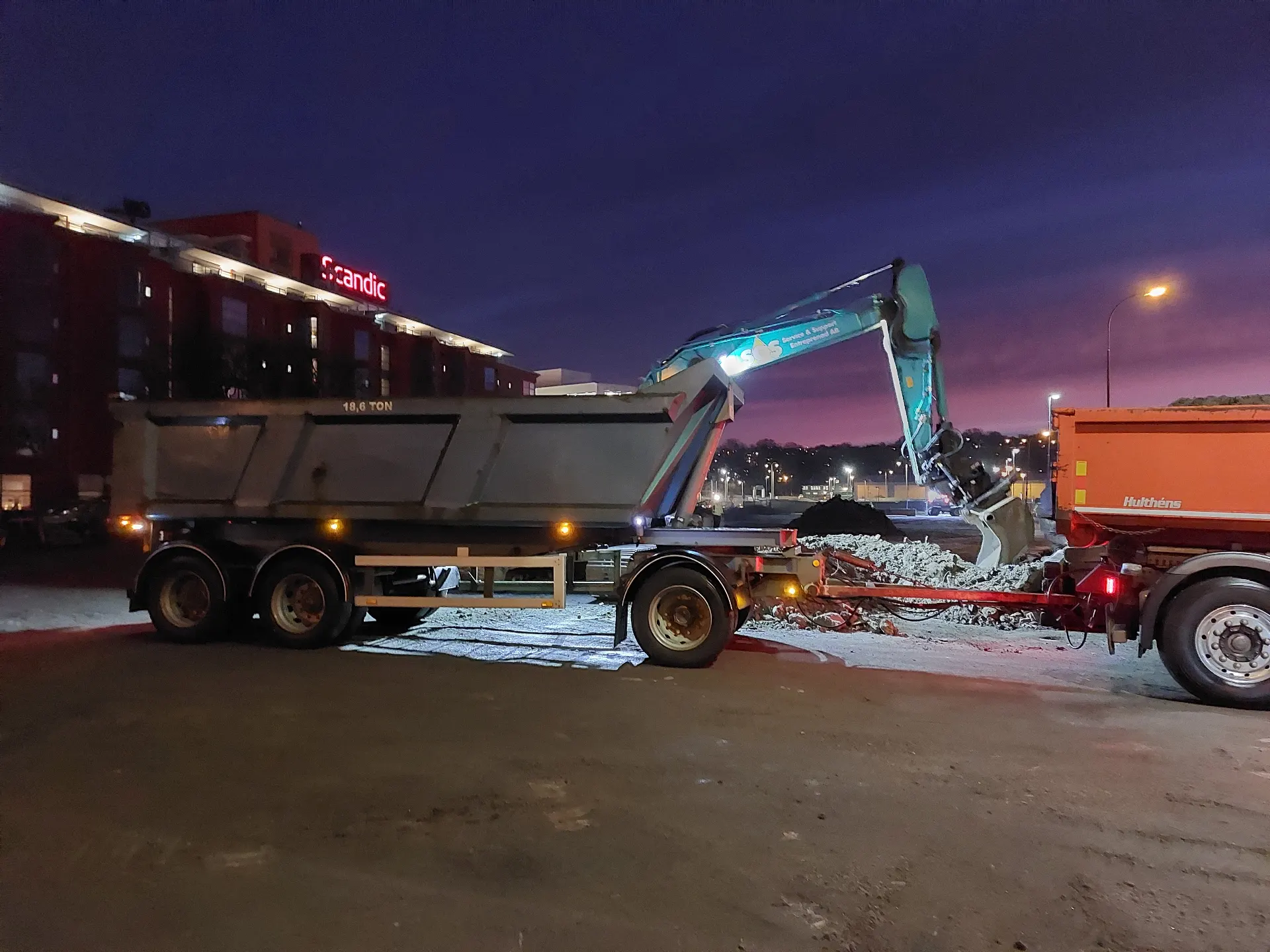
Wallenstam is the developer and client on the new residential project at Åbybergsgatan in Mölndal — an apartment building with a large basement and therefore extensive excavation. The site had previously held buildings and a car park, leaving mixed masses with demolition waste near the surface. Wallenstam kept environmental and permit matters in-house and knew from the start that the documentation around the masses had to be traceable and reportable end to end. Pinpointer became the tool that made it possible.
Large excavation volumes, mixed masses and early planning
The project is a new apartment building with a large basement. The excavation involved large volumes of material — mostly clay, all the way down to bedrock — and shallower mixed fill from previous buildings and car park use.
Wallenstam chose to handle planning permission, environmental and permit work in-house and worked ahead of construction with pre-classification and groundwork for procurement. The need for clear reporting toward Mölndal Municipality was known from the start — both because of how the implementation agreement (genomförandeavtal) was structured and because of Wallenstam's own responsibility as developer.
The risk sits with the developer — the control sits elsewhere
For a developer, visibility into the actual material flow is often limited. Responsibility and risk sit with the developer, while control over the work itself sits with contractors and sub-contractors. Reconciliation arrives after the fact — and by then it's usually too late to steer anything.
"In a typical earlier setup, it's only when the job is done that you find out how it went. 'Did you keep the schedule? Yes. But by the way — it cost quite a bit more.'"
Erik compares the situation to seeing the doctor or the car mechanic: you can easily end up at the mercy of the other party's account, without solid data of your own. It's both an accountability issue and a financial risk — and it requires trust between the parties to work.
Wallenstam wanted to own the process
The need was clear: Wallenstam wanted to own the process, have control over what happened in the field, and be able to report the whole execution straight and openly — both internally and toward the municipality. The Pinpointer recommendation came partly from Wallenstam colleagues in Stockholm and partly from the environmental consultancy (Jordnära) involved in the project.
"We saw a clear need for very good control over the earthworks — and to get documentation as clear as it could possibly be."
Pre-classification as forecast — outcome measured against it
Wallenstam entered Pinpointer with a completed pre-classification of the masses and an estimated volume per fraction. That became a forecast to measure outcomes against. When unplanned fractions appeared during the work — topsoil, demolition waste, mixed fill — it showed up immediately, and Wallenstam could add new fractions and follow those too.
The platform became a tool for both follow-up and forecasting: early in the project, Wallenstam could work out a realistic final picture and use it in dialogue with both contractor and municipality.
Pre-classification as forecast
Wallenstam entered Pinpointer with a pre-classification of the masses and an estimated volume per fraction — a forecast to measure the outcome against.
New fractions added on the fly
When unplanned masses appeared — topsoil, demolition waste, mixed fill — it showed up immediately and could be added as new fractions.
Daily reconciliation, not a final verdict
Erik and his colleagues could follow the work day by day instead of waiting for a final reconciliation when the job was already done.
Straight reporting to the municipality
Results could be reported openly and traceably in dialogue with Mölndal Municipality — on the same data used internally.
Black on white, end to end — not a verdict after the fact
Instead of getting the verdict when the job was finished, Erik and his colleagues could follow the work daily. That gave a forecast and likely final cost much earlier, a well-founded basis for dialogue with contractors and municipality, and visibility into the value chain — where the masses actually went and which actors were involved.
"With this tool you have it black on white the whole way. It really is a new asset."
Early forecast of the likely outcome
Based on actual field data, not after-the-fact estimates.
Well-founded basis for dialogue
Same numbers in conversations with contractors and the municipality — no verdict arriving after the fact.
Visibility into the value chain
Where the masses actually went and which actors were involved.
Calm start in the field
One kick-off meeting with the earthworks contractor — then everyone was on board.
One kick-off meeting — then everyone was on board
The usual worry with new tools — that drivers and operators won't come along — turned out to be unfounded. The earthworks contractor was positively inclined and Wallenstam effectively only needed one kick-off meeting before everyone was on board.
"There was no grumbling during execution. One kick-off meeting — then everyone was on board."
Accountability, brand, and being able to stand behind your work
For Erik, the value isn't only about cost. It's also about accountability and being able to stand behind what you've done — toward authorities, toward the municipality, and toward your own brand.
"It's like opening the door into an area that used to be hidden."
"If you care about your brand, this is a tool to make sure you do the right thing in this area too."
"Transparency and control — those are the biggest wins."
Want the same visibility — every day?
We're happy to show how Pinpointer gives developers daily control of the material flow and documentation that holds up the whole way — internally and toward the municipality.